
Leading Game Providers in Online Casinos

Trustworthy online casino game providers combine transparent RTP, certified RNG, and innovative mechanics. I’ve spent time spinning reels from NetEnt, Microgaming, Pragmatic Play, and Evolution, and I’ve watched how their products behave under real play. A provider’s reputation hinges on three moving parts. Licensing, RTP performance, and game engine innovation all matter equally.
What Makes a Leading Game Provider – My Take
Think of a slot provider like a bicycle gear system. The RTP is your chainring. It determines how much of your input (your bet) gets converted into output (winnings) over the long haul. Volatility is the cassette. A low-volatility game shifts smoothly with small wins often. High volatility feels like a steep climb with occasional bursts of speed. The RNG is the bottom bracket. It has to be smooth, consistent, and independently verified, or the whole machine wobbles.
A provider earns trust when its RNG is tested for fairness and submitted to labs like eCOGRA for certification. eCOGRA’s certification process tests that the outcomes are truly random and that the game’s stated RTP matches what players actually experience over a large sample. I’ve seen eCOGRA seals on several casinos in Alberta, and that gives me more confidence than any marketing claim. The UK Gambling Commission publishes guidance requiring licensees to continuously check that a game’s actual RTP stays within a reasonable range of its theoretical value. That ongoing oversight is a requirement for trustworthy operations.
Breadth of game types matters too. Established providers produce slots, table games, live dealer streams, and sometimes scratch cards or bingo. That variety signals investment in multiple production lines and regulatory approvals. NetEnt, Microgaming, Pragmatic Play, and Evolution all have deep portfolios covering different player preferences.
Major Slot Developers I’ve Actually Played
NetEnt
NetEnt is established and prolific. I’ve played Starburst, Dead or Alive 2, and Gonzo’s Quest extensively. The animations are smooth, the sound design is tight, and the RTPs are published clearly on their game information pages. NetEnt pioneered the “avalanche” mechanic in Gonzo’s Quest, where symbols fall into place after each win. This changed how slots feel. They also developed the “cluster pays” concept in Aloha! Cluster Pays. I’ve found their volatility to be medium on average, which suits players who want balance between frequency and size of wins. NetEnt holds licenses from the Malta Gaming Authority, UK Gambling Commission, and others, with RNG certified by eCOGRA and other labs.
Microgaming
Microgaming is the old guard with a large progressive jackpot portfolio. I’ve spun Mega Moolah and its sequels. The jackpot ticker climbs into the millions across all casinos playing the game. Network pooling across casinos requires serious infrastructure. Microgaming also runs the Quickfire platform, which lets smaller casinos access their entire library. Their RTPs tend to be in the mid-90s range. Some of their older games feature slightly lower volatility compared to newer releases. They were early adopters of the Megaways mechanic through a partnership with Big Time Gaming. Break Da Bank Again Megaways demonstrates this approach, built under licence from Big Time Gaming’s engine, with RTP in the mid-90s range. Microgaming’s licensing is similarly broad, and they’ve been around long enough that their compliance history is well documented.
Pragmatic Play
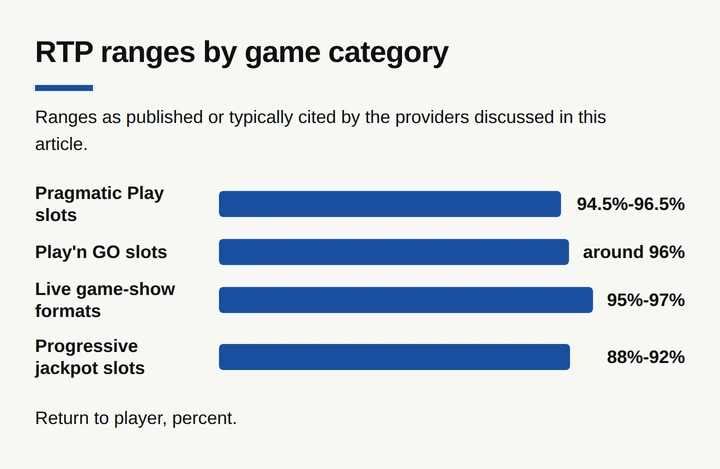
Pragmatic Play has grown rapidly over the last few years with titles like Wolf Gold, Sweet Bonanza, and The Dog House. All feature high volatility and the “bonus buy” option that lets you purchase the free spins round directly. That feature is controversial because it can drain a balance fast. It demonstrates how providers tailor mechanics to different player appetites. Pragmatic Play’s RTPs are usually stated as a range (e.g., 94.5%–96.5%). Their games feature bright graphics and frequent small wins between big hits. They also produce live dealer games and operate a dedicated live studio. Pragmatic Play holds licenses from the Malta Gaming Authority, UK Gambling Commission, and Curacao eGaming, and their RNG is certified by several labs including Gaming Laboratories International (GLI).
Live Dealer and Table Game Specialists
Evolution Gaming
Evolution Gaming is the largest live-dealer studio globally, with 45–60% of the live-casino market depending on methodology. I’ve joined blackjack tables and Lightning Roulette sessions at regulated Canadian casinos and observed multiple camera angles, professional dealers, and real-time betting interfaces. Their key innovation is the “game show” format. Dream Catcher, Monopoly Live, and Crazy Time combine a live host with a spinning wheel and bonus rounds. These games have a different RTP structure (often around 95–97%), optimized for entertainment. Evolution is licensed by the Malta Gaming Authority, UK Gambling Commission, and others, and their RNG is certified by eCOGRA and GLI.
Playtech
Playtech is another major player in live dealer and table games. I’ve tried their Age of the Gods series, which includes both slots and a live dealer version of the jackpot game. Playtech’s live studio offers baccarat, roulette, and blackjack with multiple camera views. They also produce virtual sports and poker platforms. Their licensing is similar to Evolution’s, and they have a strong presence in the UK and European markets. I’ve found their live dealer interface reliable. It feels a step behind Evolution’s in production polish.
Play’n GO
Play’n GO develops slots, table games, and live dealer titles. Book of Dead, Reactoonz, and Rise of Olympus are widely played, with Reactoonz introducing the “grid” system and high volatility bonus mechanics. Play’n GO focuses on mobile-first design, so their games run smoothly on phones. RTPs are usually around 96%. They hold licenses from the Malta Gaming Authority, UK Gambling Commission, and others.
Provider Licensing and Certification – The Real Backbone
The difference between a trustworthy provider and a questionable one often comes down to licensing. Recognized regulators — the Malta Gaming Authority (MGA), UK Gambling Commission (UKGC), and Gibraltar Regulatory Authority — require providers to submit their games for independent testing before they can be offered to players. The UKGC, for example, publishes a guide on live RTP performance monitoring, which I referenced earlier. That guide explains how licensees must continuously track actual RTP against theoretical RTP and take corrective action if the deviation exceeds a certain threshold. Regulatory oversight is continuous throughout a game’s lifespan.
eCOGRA is one of the testing labs that performs these certifications. Their process includes reviewing the source code of the RNG, running statistical tests for randomness, and verifying that the game’s paytable matches the stated RTP. eCOGRA certification is recognized by regulators like the UKGC and MGA as a reliable indicator of fairness. Other labs include GLI, BMM Testlabs, and iTech Labs.
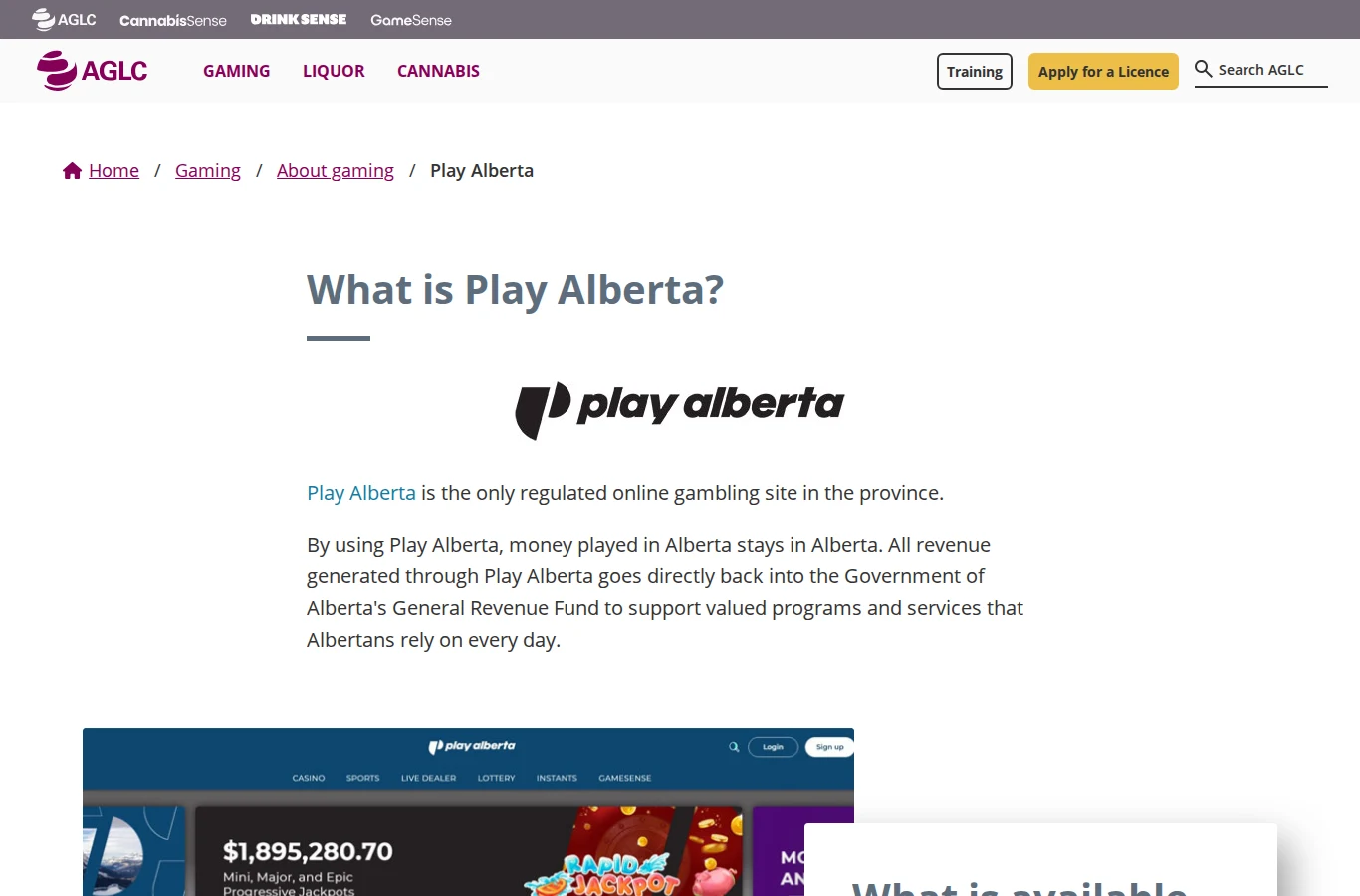
Curacao eGaming operates with lighter regulatory requirements. Many providers hold a Curacao license as a secondary option. In Alberta, the AGLC (Alberta Gaming, Liquor and Cannabis) works with Play Alberta, which only lists games from providers that have been tested by recognized labs. So if you’re playing at a Play Alberta casino, you can be reasonably sure the games have passed some level of scrutiny.

Recent Innovations: Megaways, Cluster Pays, Bonus Buy, Progressive Jackpots
Over the last decade, game developers have introduced mechanics that reshape how slots work.
Megaways
Megaways is a licensed mechanic from Big Time Gaming that changes the number of symbols on each reel, creating a variable number of ways to win. Maximum is 117,649 ways (7 symbols × 6 reels = 7^6). I’ve played Megaways slots from Pragmatic Play (The Dog House Megaways) and Microgaming (Break Da Bank Again Megaways). One spin might give you 324 ways, the next 117,649. That unpredictability is part of the appeal. RTP on Megaways games is usually similar to standard slots, but variance can be higher.
Cluster Pays
Cluster pays replace traditional paylines with groups of matching symbols that touch each other. NetEnt’s Aloha! Cluster Pays and Play’n GO’s Reactoonz are good examples. I’ve found cluster pays games to be more engaging because wins feel more organic — symbols disappear and new ones drop in, creating cascades. The RTP tends to be in the 96% range, and volatility varies.
Bonus Buy
Bonus buy allows players to purchase the free spins round directly, skipping the base game. This feature is popular in high-volatility slots like Sweet Bonanza and The Dog House. You can reach the big win potential immediately. This approach carries the risk of spending a lot without any return. Providers adjust the RTP slightly to account for the cost. In Alberta, bonus buy is allowed; some jurisdictions restrict it.
Progressive Jackpots
Microgaming’s Mega Moolah is the most famous progressive jackpot network. The jackpot grows from every bet across all casinos that offer the game. I’ve seen the meter climb past $10 million. RTP on progressive slots is usually lower (around 88–92%) because a portion of each bet goes into the jackpot pool. NetEnt (Mega Fortune) and Playtech (Age of the Gods) also have progressive networks. The jackpot must be audited and paid according to the rules, which is why licensed providers matter.
How to Spot a Quality Casino Partnership
Quality separates from smoke and mirrors through these markers.
When I evaluate an online casino, I check:
1. Provider breadth: A casino carrying a wide range of studios has usually passed more third-party certifications than one running two or three.
2. Certification seals: Look for eCOGRA, GLI, or BMM displays on the casino site.
3. Jurisdictional variety: A casino offering NetEnt likely holds MGA or UKGC licenses, because those providers only supply licensed operators. In Alberta, Play Alberta is the official filter.
4. Game information: Reputable providers show RTP, volatility, and max win per game. Missing or vague data is a red flag.
My Conclusion
Leading game providers invest in independent RNG certification, maintain transparent RTPs, and innovate with mechanics that change how you play. Each excels in a different area: NetEnt brings production quality, Microgaming specializes in jackpots, Pragmatic Play delivers high volatility, and Evolution leads in live dealer. Ongoing oversight by the UK Gambling Commission and labs like eCOGRA distinguishes them. In Alberta, Play Alberta casinos already meet these checks.
Remember, gambling is for entertainment only. If you or someone you know has a gambling problem, contact the Alberta Addiction Helpline at 1-866-332-2322 or visit GameSense for resources. Always play within your limits and never chase losses.
FAQ
1. What is the most important factor when choosing a game provider?
The most important factor is independent certification of the RNG and RTP. Without that, you have no guarantee the game is fair. Look for seals from eCOGRA, GLI, or BMM Testlabs.
2. Are Megaways slots better than traditional slots?
Megaways offer a different experience with more ways to win per spin. Volatility is often higher. Choose based on your preference for unpredictability.
3. Can I trust the RTP numbers published by providers?
Generally yes, if the provider is licensed by a reputable regulator like the UKGC or MGA. Those regulators require continuous monitoring, so the published RTP should be accurate over the long term.
4. Do live dealer games have the same RTP as virtual table games?
Live dealer games often have slightly lower RTP because of the operational costs, but the difference is usually small (e.g., 0.5–1%). The main advantage is the real-time interaction.
5. Is bonus buy a good feature?
It can be, but it’s risky. You pay a premium to skip the base game, so you might lose more if the bonus round doesn’t pay. Use it only if you understand the volatility.
6. What providers are available at Play Alberta casinos?
Play Alberta’s confirmed lineup includes NetEnt along with studios like Red Tiger, IGT, Everi, AGS, Ainsworth, Inspired Entertainment, High 5 Games, and Konami. Provider rosters change, so check the platform’s current game list rather than assuming every major studio is represented there.
7. How do I know if a provider is licensed in Alberta?
Check the casino’s footer for the AGLC license number or look for the Play Alberta logo. If the casino is not part of Play Alberta, verify that the provider holds a license from a recognized regulator like the MGA or UKGC.
8. What is the difference between RTP and volatility?
RTP is the theoretical percentage of all bets that the game returns to players over time. Volatility describes the size and frequency of wins. High volatility means bigger but less frequent wins; low volatility means smaller but more frequent wins.